

Google “best niches for marketing agency” and you get a list of 100 industries. Right under it there’s a Reddit thread about eight niches that are “PRINTING money,” and a little further down, another one titled “The Whole Niche ‘Agency’ Thing Has Gone Too Far.”
Every one of those lists is trying to tell you which industry to pick. I get it. That’s the question most agency owners bring to me, and I asked it myself more than once. But a buyer landing on your homepage is asking something else. They want to know whether your niche makes their life any easier.
So I went looking for agencies that answer that question well, the ones that put proof on the page that the niche helps the person hiring them. I found twelve, serving everything from car washes and funeral homes to tattoo studios and board game Kickstarters.
Quick disclaimer before we start. I’m not grading these websites or telling you to hire anybody. I’m looking at one thing: what each agency put on its site to show the niche benefits the buyer. I pulled every quote on September 21, so if you click through and something has changed, that’s why.
Picking the niche is the easy part
In the 11 Differentiation Levers, niching is the first lever, Market Focus. It’s also the most crowded one, because most owners plant the flag and stop there.
You can be narrow and still shallow. A shallow niche mostly helps the agency, since it’s easier to explain what you do, while the buyer gets nothing they couldn’t get from a generalist.
What the twelve agencies below have in common is that they back the niche up. The proof tends to show up in one of three ways:
Understanding. They use the buyer’s words and report the number the buyer already counts.
Experience. They’ve been the buyer, or they run the same kind of business.
Resolve. They put in writing the work they won’t take.
You only need one of these to start. Let’s look at who does what.
Understanding: they talk like the buyer
The quickest way to show a buyer you know their business is to report results in the unit they already count, and to name their problem the way they’d complain about it.
Fully Booked Venue (wedding venues).
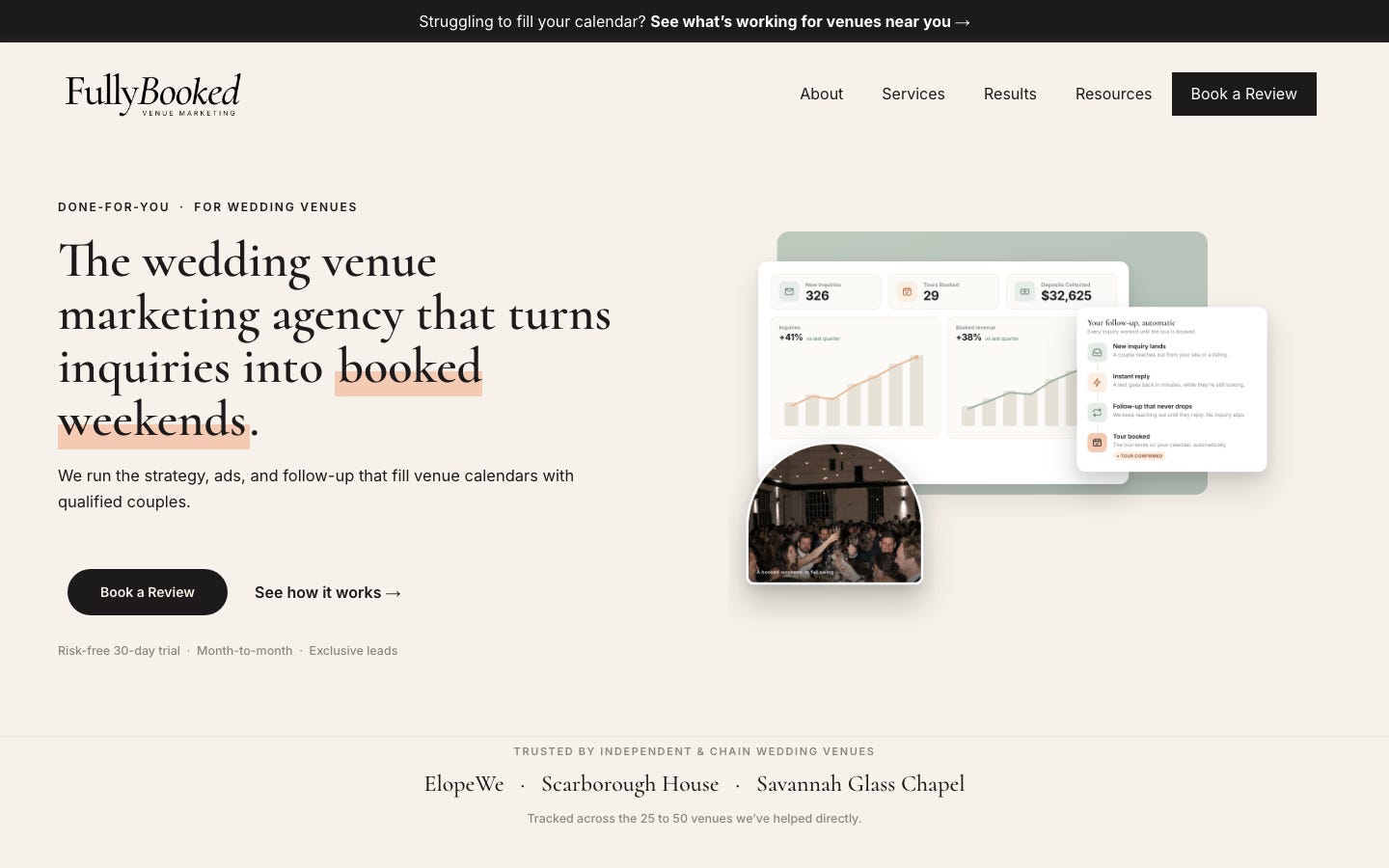
They call themselves “the wedding venue marketing agency that turns inquiries into booked weekends,” and further down they say which number matters to them: “We measure the one that pays the mortgage: tours booked, and what each one costs.” A venue owner runs the business on tours and filled Saturdays, so that line lands before any case study does. They back it with one number, a $58 cost per booked tour for Savannah Glass Chapel after five months of their Meta ads.
FirstCall Marketing (funeral homes).
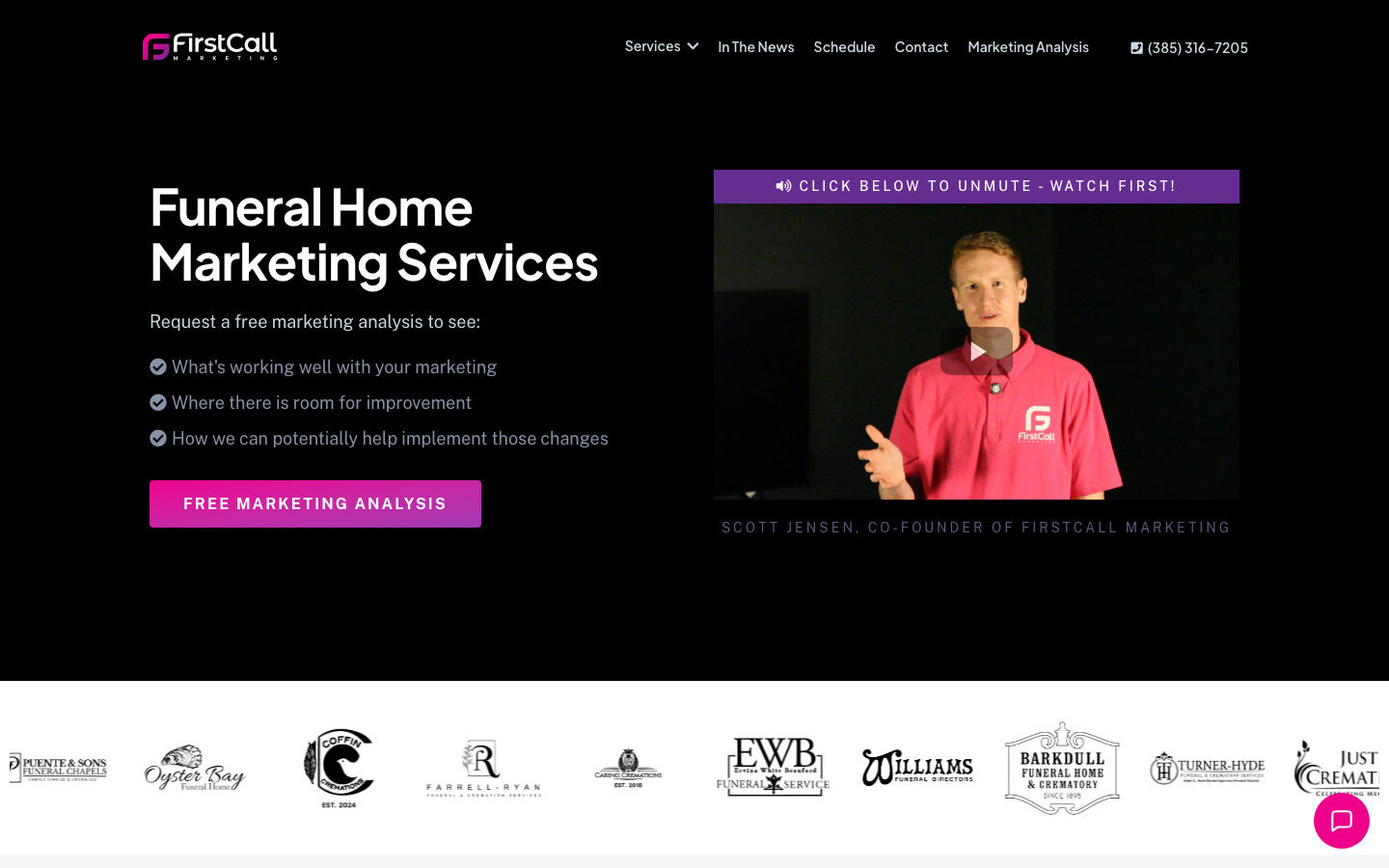
The name comes from the industry’s own phrase, and one heading on the homepage just says “Funeral Homes Only.” My favorite line is about attribution. They promise to “differentiate which calls came from us vs. ones you would get anyway.” An established funeral home already gets calls from families who’ve known it for decades, so what the owner wants to know is which calls the marketing added. You’d have to spend time in that business to think of answering it.
InkAdmin (tattoo studios).
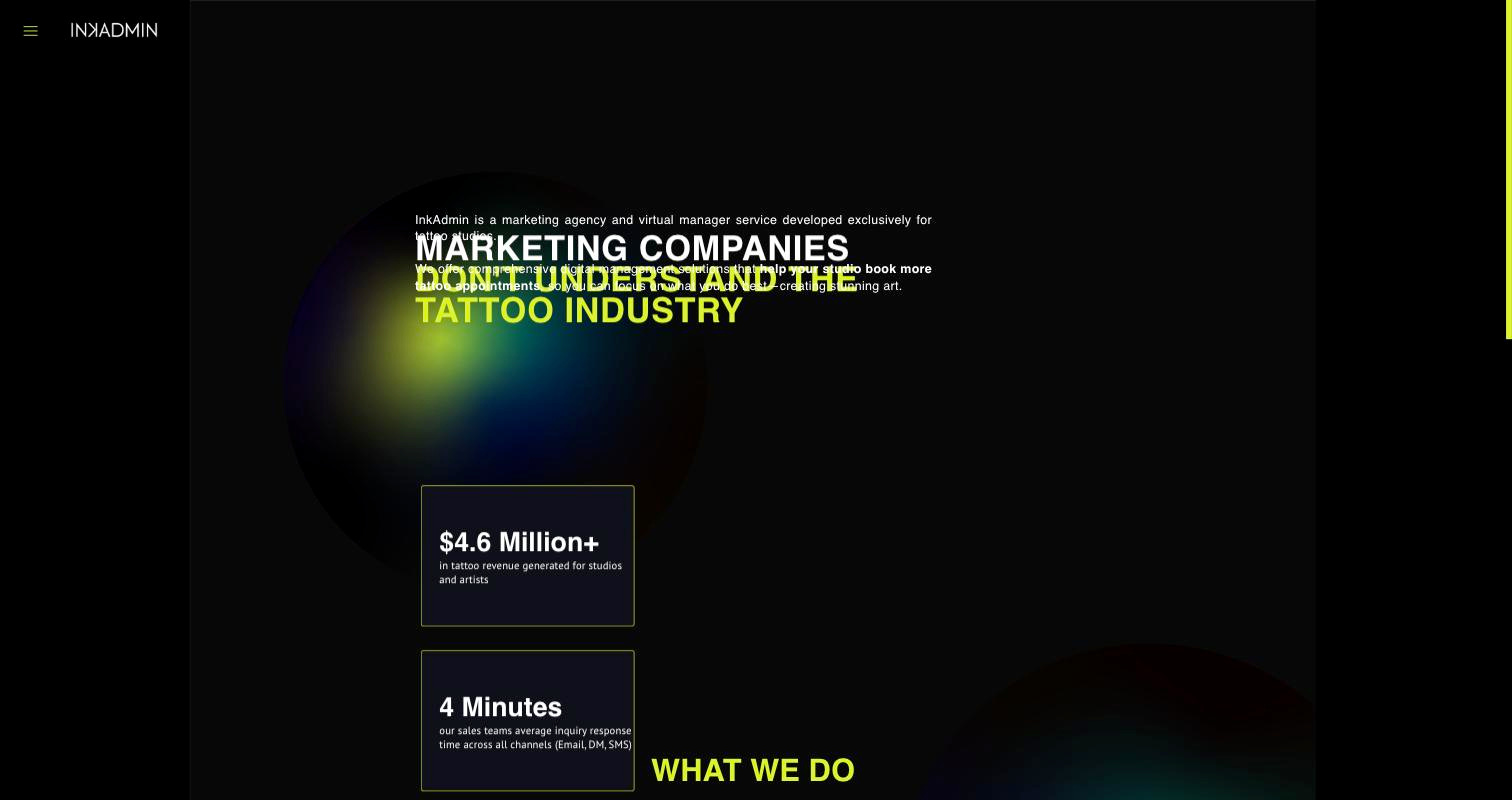
The headline is an opinion: “MARKETING COMPANIES DON’T UNDERSTAND THE TATTOO INDUSTRY.” They prove it with how the work gets done. Tattoo inquiries come in by DM, email and text, so InkAdmin answers them, with a 4-minute average response time across all three. They also run ads for tattoo convention ticket sales, which a generalist wouldn’t know to offer.
ChurchCandy (churches and church plants).
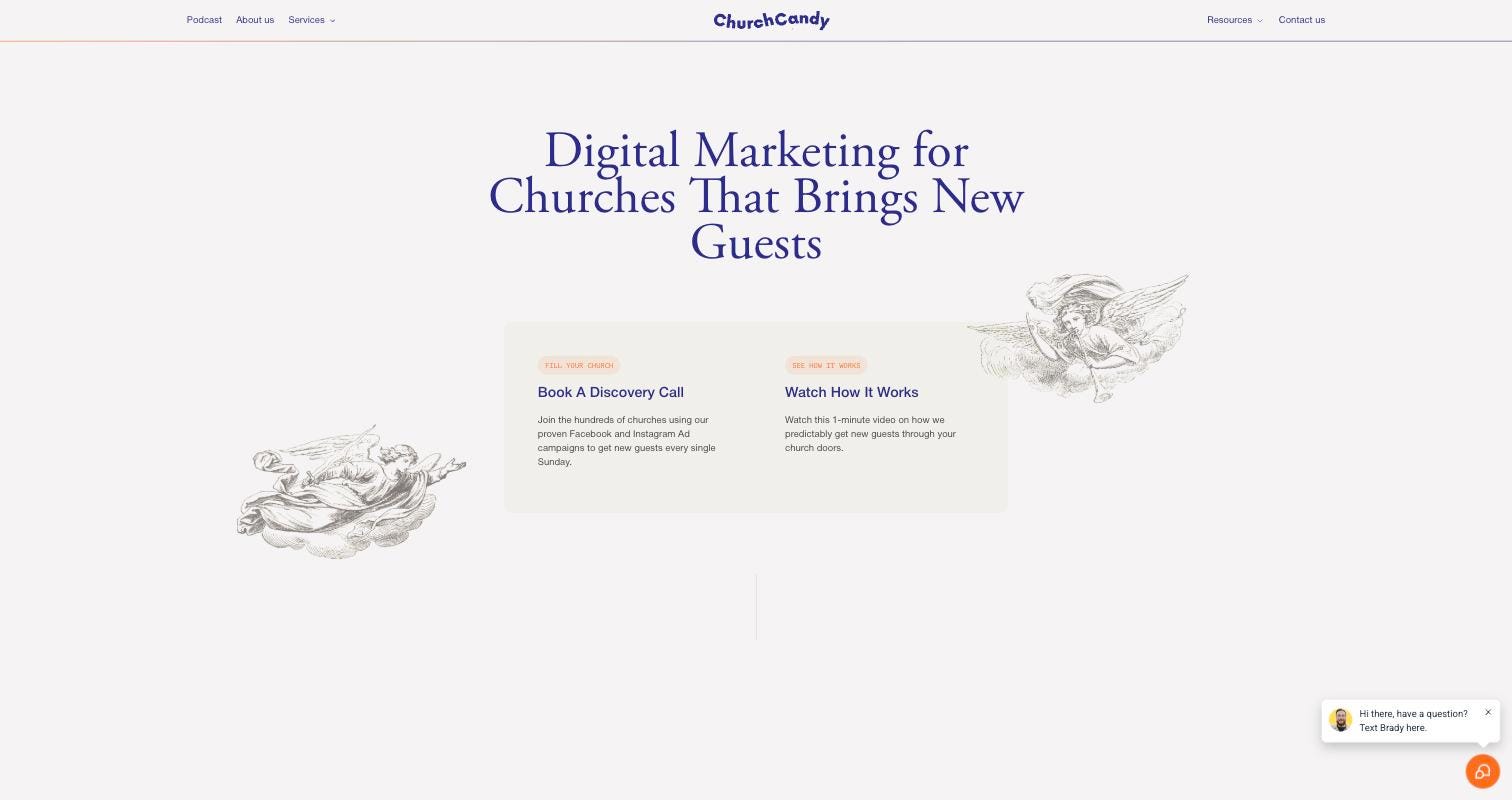
They talk about guests, which is the word churches already use: “Digital Marketing for Churches That Brings New Guests.” Campaigns are built around the Plan Your Visit form churches already have, and there’s a separate offer for new church plants, to “fill your Grand Opening service with hundreds of new guests.” Splitting the offer that way tells a pastor this agency knows a launch is a different problem from growth.
Vinbound Marketing (wineries).
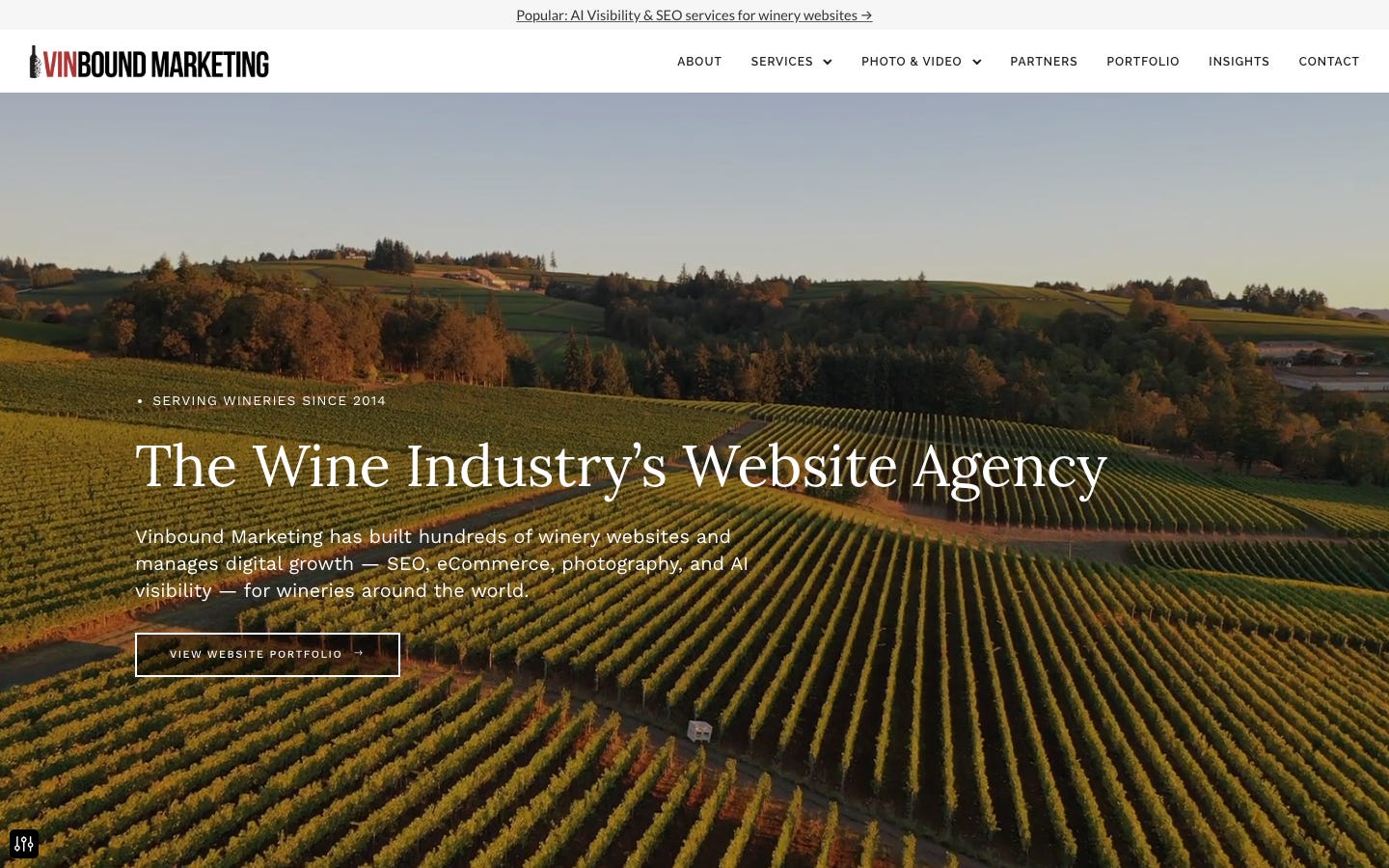
“The Wine Industry’s Website Agency,” and then it gets very specific. They build around “DTC sales, wine club growth, tasting room traffic, and the seasonal rhythms of harvest, release, and event calendars,” and they list migrations from WineDirect to Commerce7, two wine ecommerce platforms. Anyone who has lived through one of those migrations knows how rare that experience is. They report 300+ winery websites managed.
Experience: they’ve been the buyer
This is the hardest proof to fake, because it’s a fact about the agency’s history and a competitor can’t borrow it.
RV Park Marketing Experts (RV parks and mobile home communities).
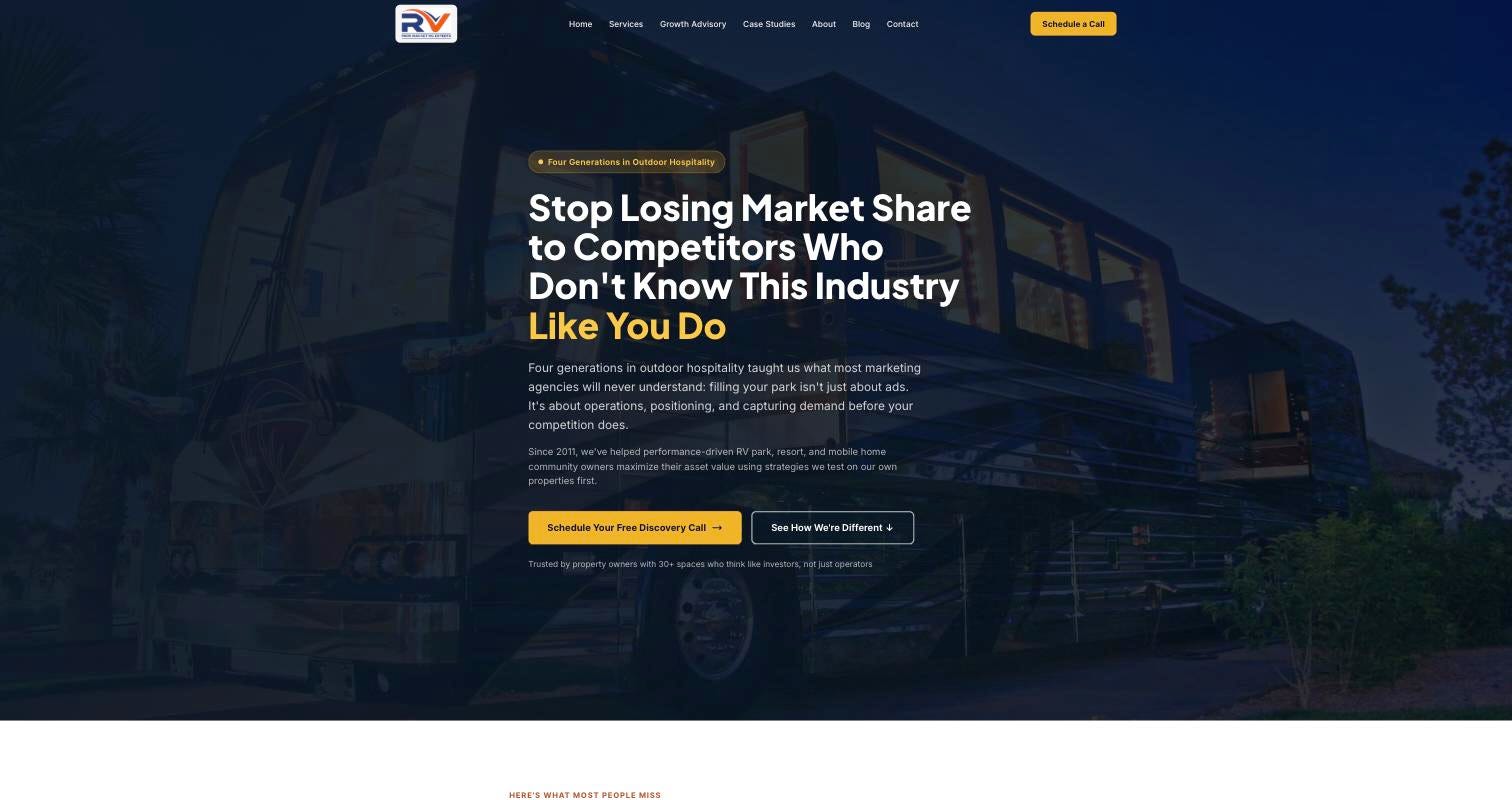
They open with “Four Generations in Outdoor Hospitality” and say they test strategies “on our own properties first.” The origin story is specific: after one year on the system in 2011, the family’s properties had “their best year since 1973,” and the agency grew out of that.
They’ve got resolve too. A section called “This Isn’t For Everyone” leads with “Have at least 30 spaces (we need scale to deliver ROI),” and the FAQ tells smaller parks they “might be better served by a simpler solution.” If you own a park, that reads like someone who has worried about occupancy with their own money and will tell you straight if you’re not a fit.
Crowdfunding Nerds (board game crowdfunding).

“We are game designers that have successfully funded multiple projects, so we know what it feels like to go through it all.” That does more than a case study could, because the scariest stretch of a Kickstarter is the one only another creator has been through.
The voice helps as well: “We probably shouldn’t be the place you go for dating advice. But when it comes to marketing games, nobody does it better!” That’s a board game crowd talking to itself, and it knows it.
Gray Peak Marketing (fly fishing and hunting).
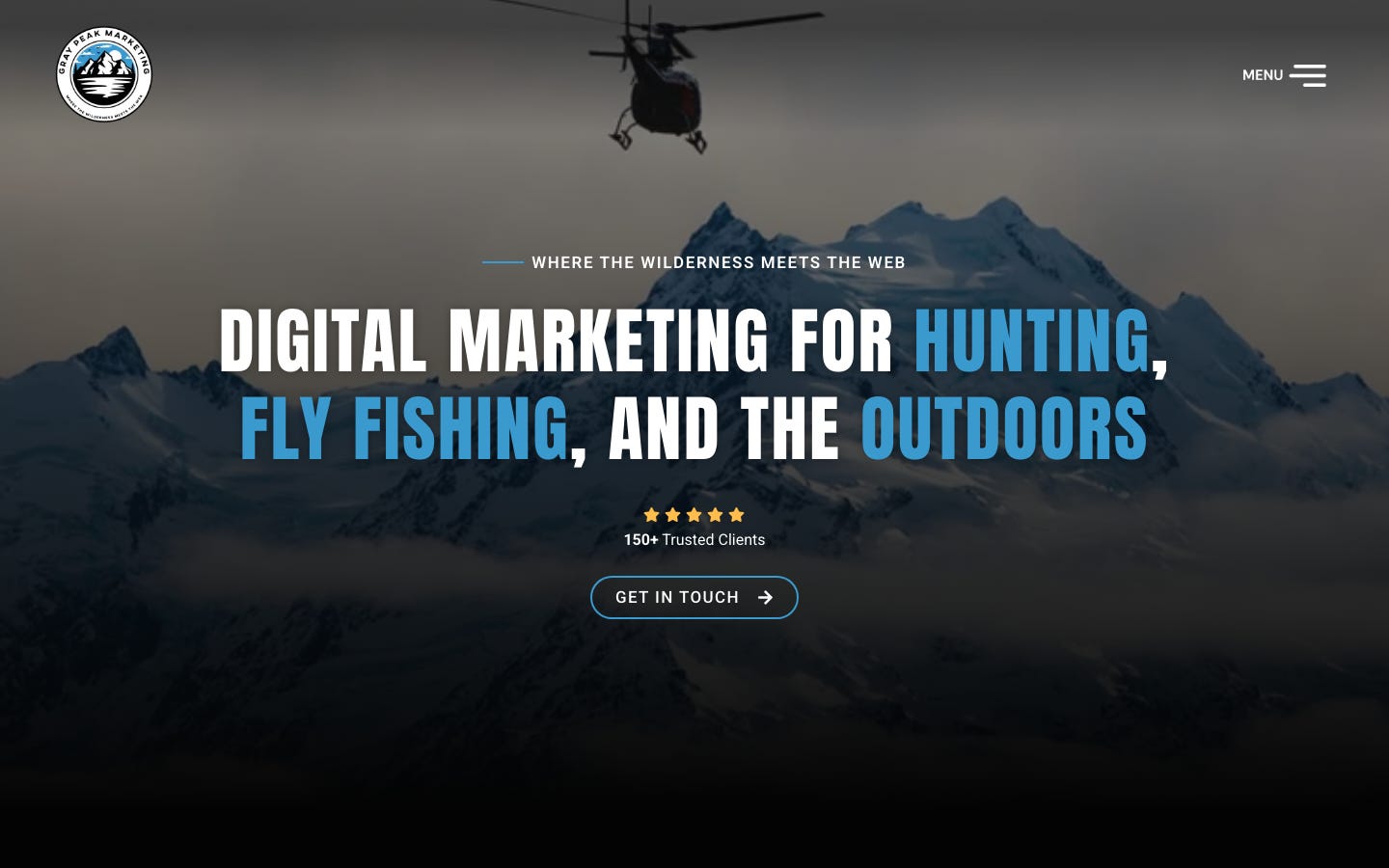
One heading reads “Built by People Who Actually Hunt and Fish,” and the vocabulary backs it up. The team understands “booking cycles, tag deadlines, hatch charts, seasonality.” A generalist wouldn’t think to mention hatch charts, and an outfitter reading the page notices right away.
Resolve: they wrote down what they won’t do
Resolve is proof you’ll give something up to stay focused. It usually shows up as an exclusion the agency put in writing.
OptSpot (car washes).
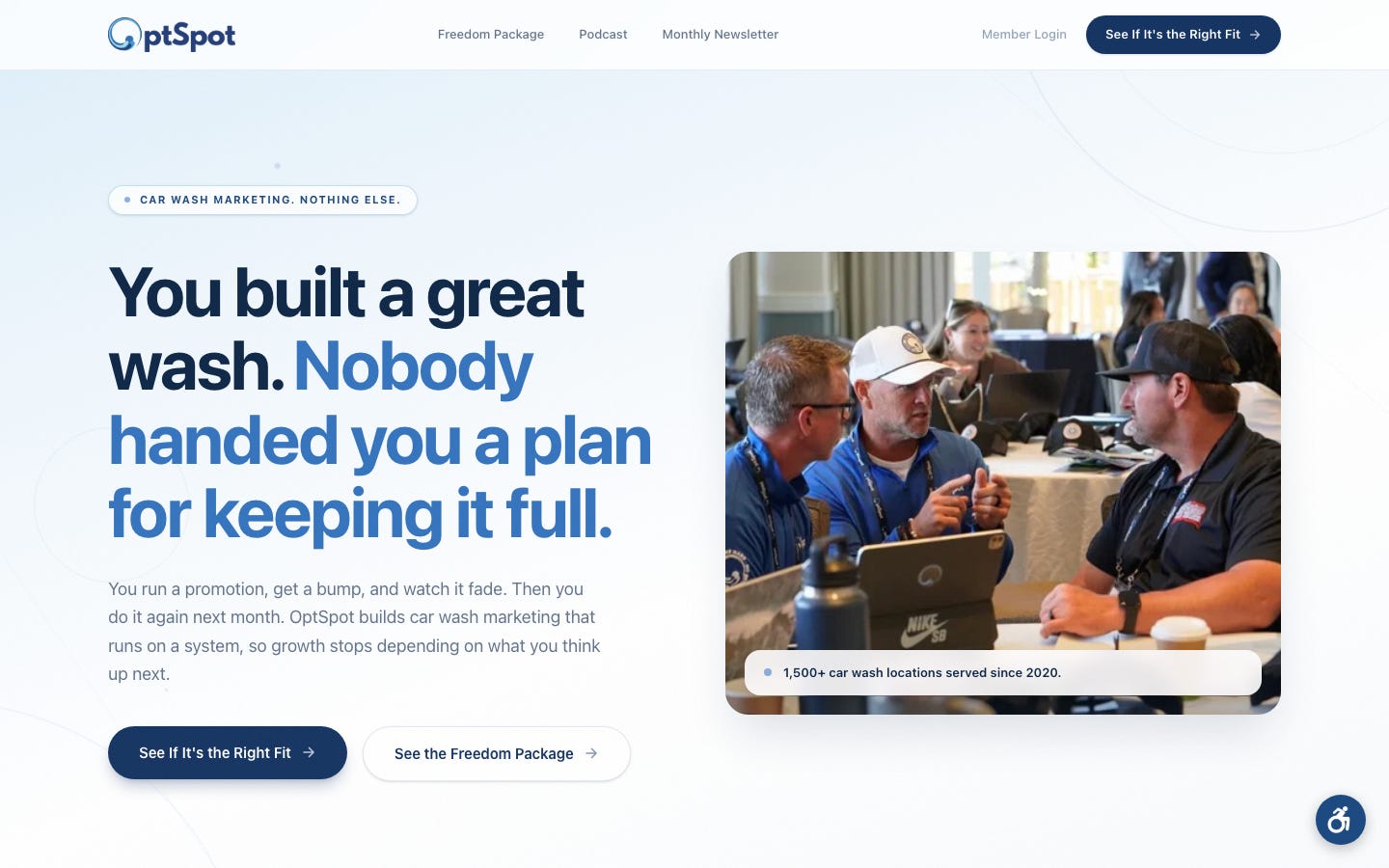
The cleanest example I found. The headline is “Car wash marketing. Nothing else.” and the page follows through: “Since 2020, OptSpot has worked exclusively with car washes. Not restaurants, not retail, not gyms.”
The pricing carries the niche too. It’s published, $2,599 a month for the first location and $599 for each additional one, which only makes sense if you expect your buyer to own more than one wash. The problem they name is specific to membership washes: “Most cancellations start with a declined card and nobody reaching out.” And they say they’ve served “1,500+ car wash locations” since 2020, so a niche that sounds tiny can go pretty deep.
Premier Cru Solutions (premium and luxury wineries).
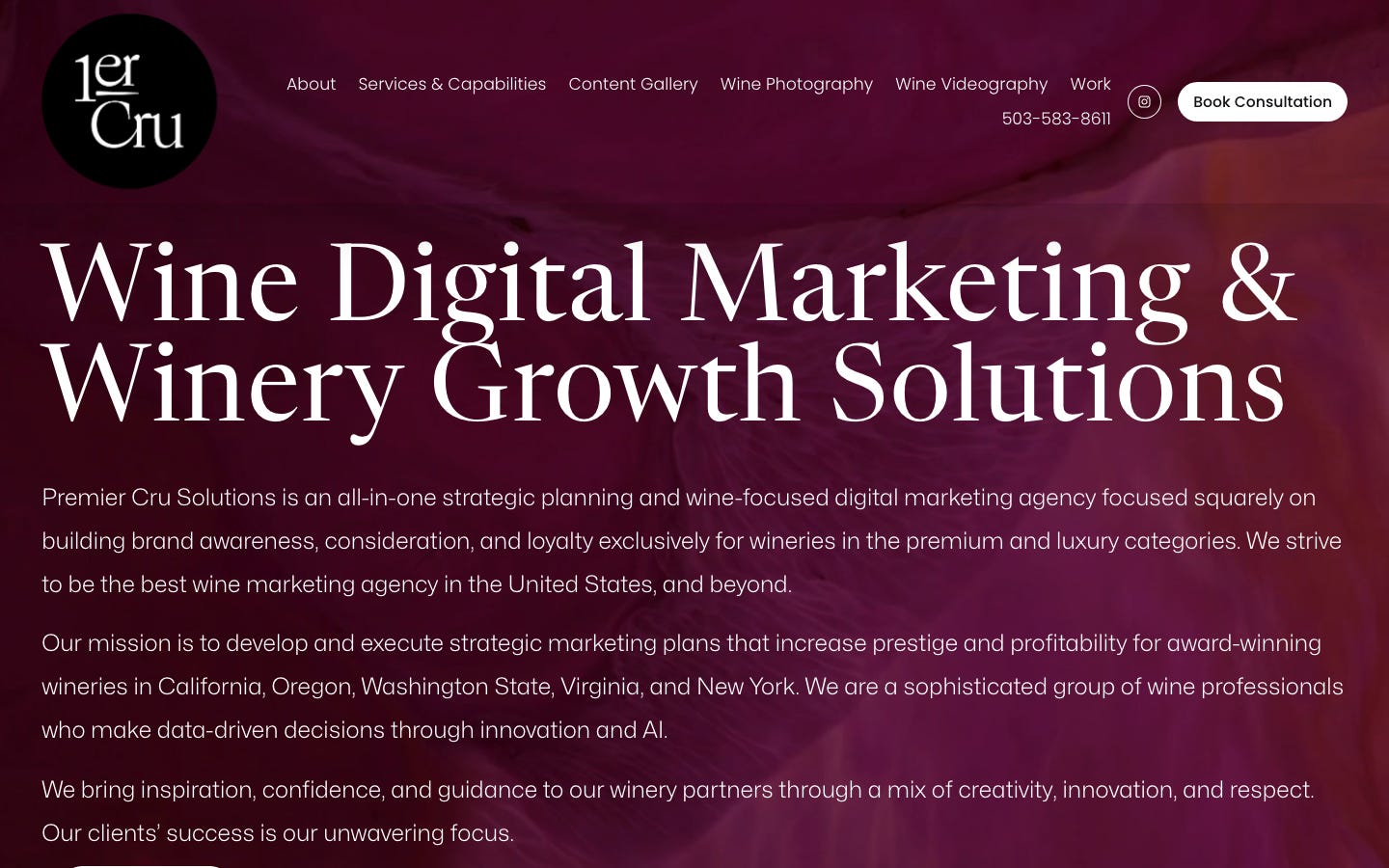
They narrow a niche that was already narrow. Vinbound serves wineries broadly, while Premier Cru works “exclusively for wineries in the premium and luxury categories,” with a mission to “increase prestige and profitability for award-winning wineries.” A luxury estate wants a different playbook from a supermarket label, and this agency tells them up front that they’ll get one.
“But I’ve never worked in the industry”

I hear this one a lot, and it keeps plenty of owners from niching at all. Martial Arts Marketing Agency‘s founder addresses it head on: “I’m not a martial arts school owner... I’m a Professional Marketer that decided to put my energy and focus into the martial arts industry out of passion.”
Their proof comes from focus and numbers. The page reports the average 2023 client’s “Average Profit (after paying us and ad spend)” at $88,754.29 and an “Average Cost Per New Member” of $81.70, with results broken out by school. Reporting profit after your own fee is unusual, and it answers the exact question a school owner asks, which is what’s left over at the end of the month.
So experience is one strong way to prove a niche, and understanding and resolve can carry it when you don’t have it. If you’ve been worried you can’t niche because you never worked in the industry, consider this your permission slip.
And yes, you can still take work outside the niche
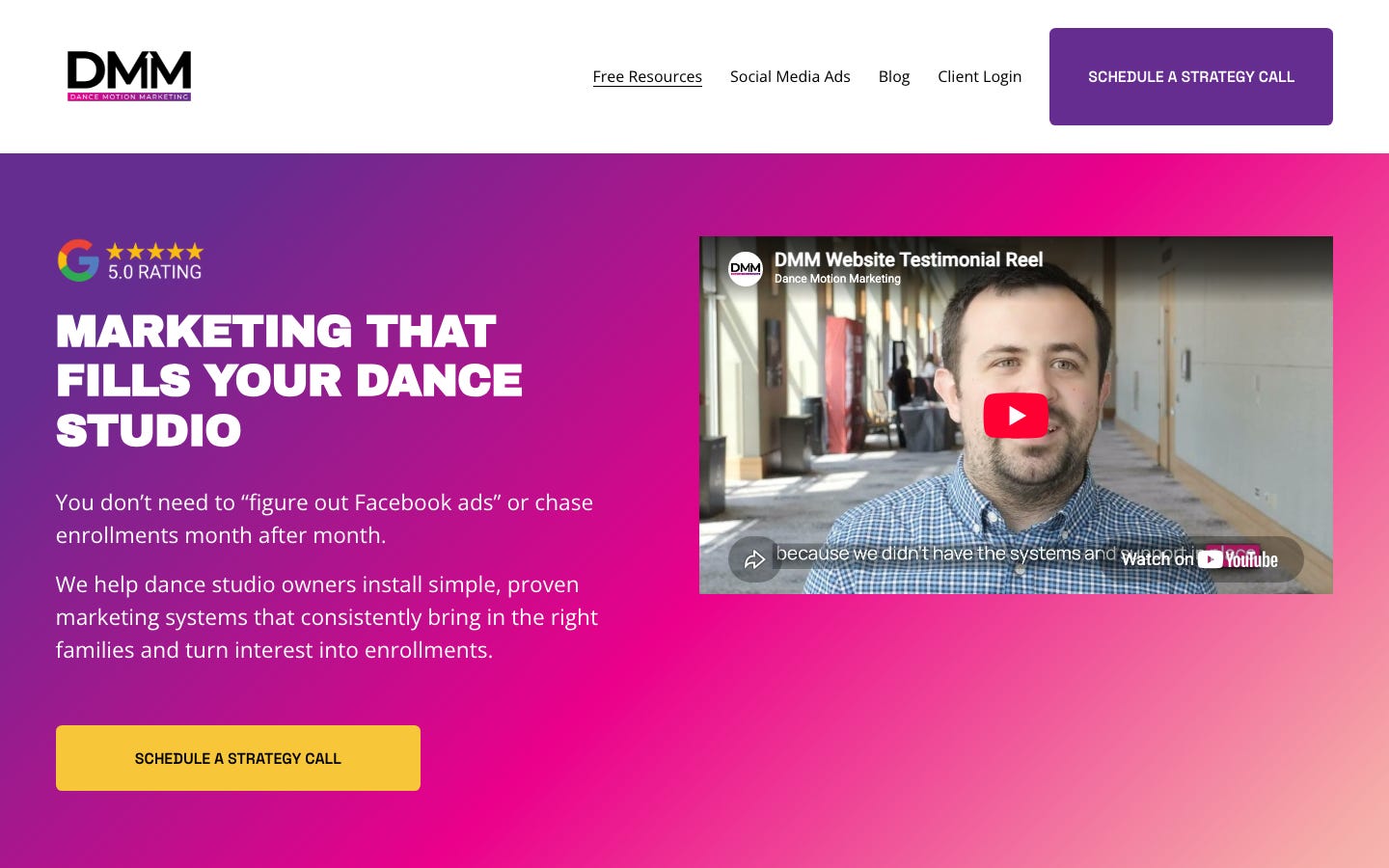
Dance Motion Marketing‘s homepage is built for dance studio owners (”Marketing That Fills Your Dance Studio”), and its pricing page says, “We primarily work with studios offering kids’ recreational dance programs, but we also help competitive studios and those looking to grow their overall enrollment.”
That’s how I teach it too. Once you niche, taking work outside it becomes a deliberate choice. The niche is your perfect-fit score, and a strong lead just outside it can still be worth taking.
Try this on your own homepage
Cover up the industry name in your headline and read the rest of the page. If nothing left tells a buyer you understand their business, you’ve lived it, or you’ll turn work away to stay in it, the niche is only helping you. (It does make it easier to explain what you do at a party.)
If you’ve already picked a niche, good. That’s the hard decision, and plenty of owners never make it. The next step is smaller than it sounds:
For understanding, rewrite one result on your site in the unit your buyer already counts, whether that’s move-ins, booked tours, members or cases.
For experience, if you or someone on your team has run this kind of business, say so near the top of the page where a buyer will see it.
For resolve, write down one kind of client you’d turn away and put it on the page, the way OptSpot did with restaurants, retail and gyms.
You’ll know it’s working when prospects start using your words back to you on calls.
If you’ve picked a niche and your homepage still reads like it could belong to anyone, that’s the work we do inside the Dynamic Agency Community.